


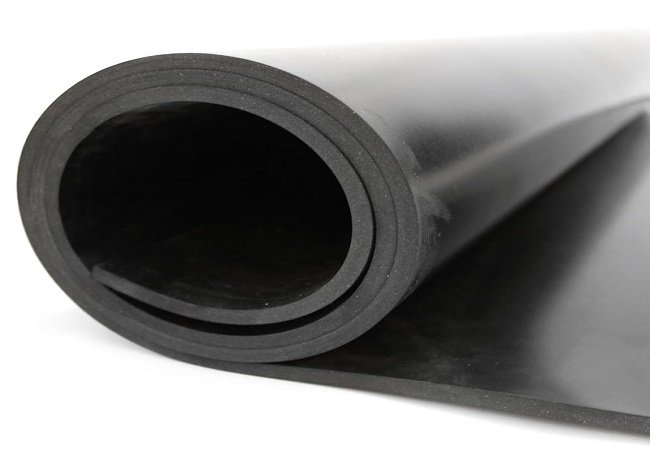

Лист резины HNBR
Аббревиатура HNBR означает гидрогенизированный бутадиен-нитрильный каучук. Листы HNBR — это материал премиум-класса, превосходящий NBR.
- Превосходная устойчивость к окисленному топливу, маслу, газу, старению, растительным и животным жирам
- Превосходные показатели прочности на разрыв и растяжение
- Хорошие механические свойства при высоких температурах
- Отличная устойчивость к маслу, газу и топливу
- Устойчив к пару и воде
- Превосходная стойкость к истиранию, износу и ударам
- Хорошая устойчивость к растворителям, химикатам, разбавленным и концентрированным кислотам
Лист резины Weprofab HNBR
Листы HNBR изготавливаются путем добавления водорода к насыщению нитрильного материала. Он создается путем насыщения бутадиена водородом. По сравнению с обычными листами нитрильного каучука, HNBR превосходит.
Weprofab производит листы HNBR, соответствующие стандартам RoHS, CE, REACH и PAH. Наши листы HNBR имеют разную длину, ширину и толщину. Мы также можем изготовить их по индивидуальному заказу в соответствии с вашими требованиями.
Свяжитесь с нами сейчас!
Hnbr Rubber Sheet Products

An HNBR sheet candidate for industrial sealing; verify the compound, dimensions, and service conditions before selection.

HNBR sheet is a candidate for cutting automotive sealing parts to the specified geometry.

HNBR skirting sheet is a candidate for conveyor containment strips cut to the required size.

Five millimeter HNBR sheet is a material option for thicker cut seals and protective pads.

HNBR sheet roll is a candidate for cutting flat seals to a specified outline.

Three millimeter HNBR sheet offers a thickness option for buyers planning industrial gaskets and seals.

HNBR sheet is a candidate for chemical sealing when the selected compound suits the fluid.

One millimeter HNBR sheet is a thinner material option for small cut seals and gaskets.

Two millimeter HNBR sheet offers a thinner material option for cut gaskets and seals.
Широкий спектр применения
Мы поставляем листы HNBR, которые могут использоваться в различных областях, таких как:
- Различные области применения, контактирующие с нефтью и газом
- Прокладки, диафрагмы, полосы и уплотнительные кольца
- Транспорт и обрабатывающая промышленность
- Уплотнения для систем обработки топлива
- Воздействие нефти, загрязненной металлическим шламом
- Аккумуляторные баллоны
- Уплотнения для нефтяных скважин и разведки нефтяных месторождений

| Удлинение при разрыве | 200% |
| Максимальная рекомендуемая рабочая температура | 150°С |
| Минимальная рекомендуемая рабочая температура | -30°С |
| Твёрдость по Шору (Шор А) | 70° Шор |
| Удельный вес | 1,3 г/см3 |
| Предел прочности | 15 МПа |
Листы HNBR обладают лучшей устойчивостью к износу и экструзии, чем листы NBR. Они также обладают лучшей химической совместимостью и озоностойкостью. По сравнению с листами NBR они также обладают большей прочностью в условиях высоких температур.
Сопутствующий продукт


How to Specify HNBR Rubber Sheet for Your Application
Your HNBR rubber sheet specification should begin with the conditions the material will face, not the material name alone. HNBR can be a strong candidate for parts exposed to oil, heat, wear, or a combination of these demands. The final choice still depends on your fluid, temperature cycle, mechanical load, finished-part design, and the particular compound offered.
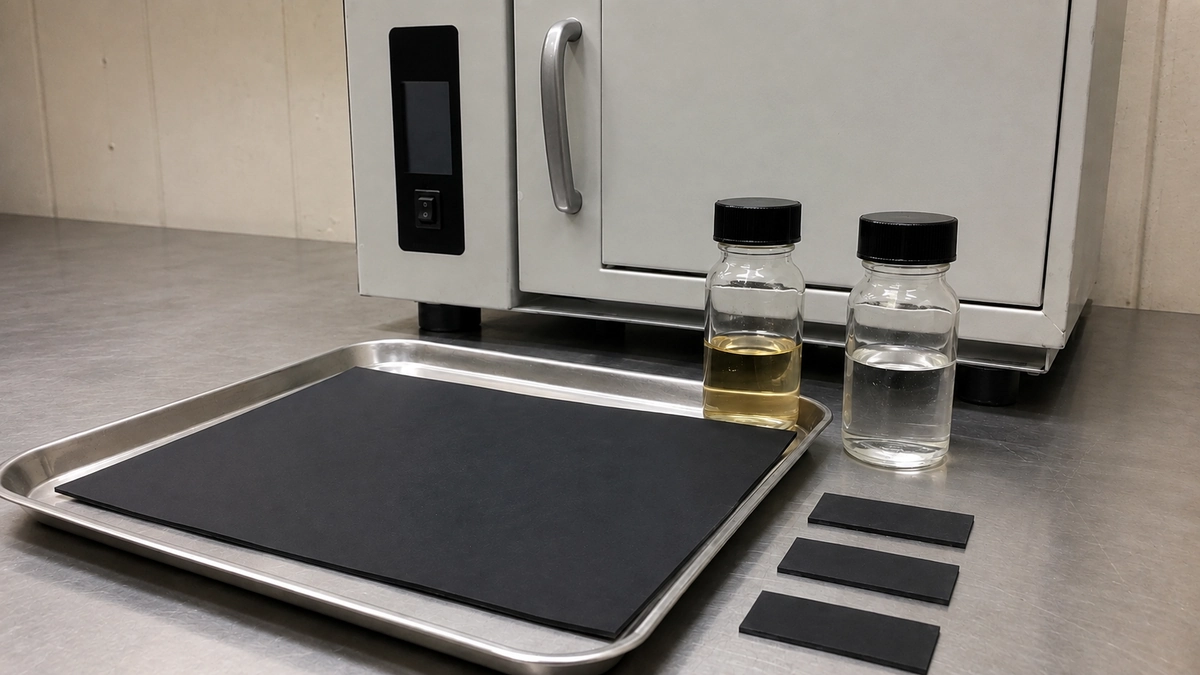
Начните с the actual medium in your system. “Oil resistant” is not a complete requirement. Identify the oil, fuel, grease, refrigerant, cleaner, or process fluid by product name or formulation where possible. Include additives, concentration, contamination, and any fluids used during cleaning or maintenance. Two systems that both use “oil” can produce very different changes in hardness, volume, tensile properties, and sealing behavior. A general HNBR chemical compatibility chart is useful for screening, but it cannot represent every compound, fluid formulation, temperature, or exposure cycle.
Exposure also needs a time and contact condition. A splash that is wiped off after each shift is different from continuous immersion. A static gasket sees a different demand from a diaphragm that flexes repeatedly. If your part contacts several fluids during one service cycle, list all of them instead of approving the sheet against the primary fluid alone.
Separate Normal Temperature From Peak Temperature
A published HNBR rubber temperature range does not describe your service cycle by itself. Give the temperature at normal operation, the peak temperature, how long that peak lasts, and how often it occurs. Also note whether the heat comes from the fluid, the surrounding air, direct contact with a hot surface, or repeated compression and movement.
This distinction matters because short exposure and continuous exposure are not equivalent. Heat can also increase the effect of a fluid on a rubber compound. A grade that looks acceptable in a room-temperature compatibility chart may need additional evidence when the same fluid is hot or when the part must retain force for a long period.
Do not use a published upper temperature as an automatic approval point. Treat it as a screening limit, then confirm the candidate compound under the duration, medium, and mechanical conditions that apply to your part.
Convert the Finished Part Into Sheet Requirements
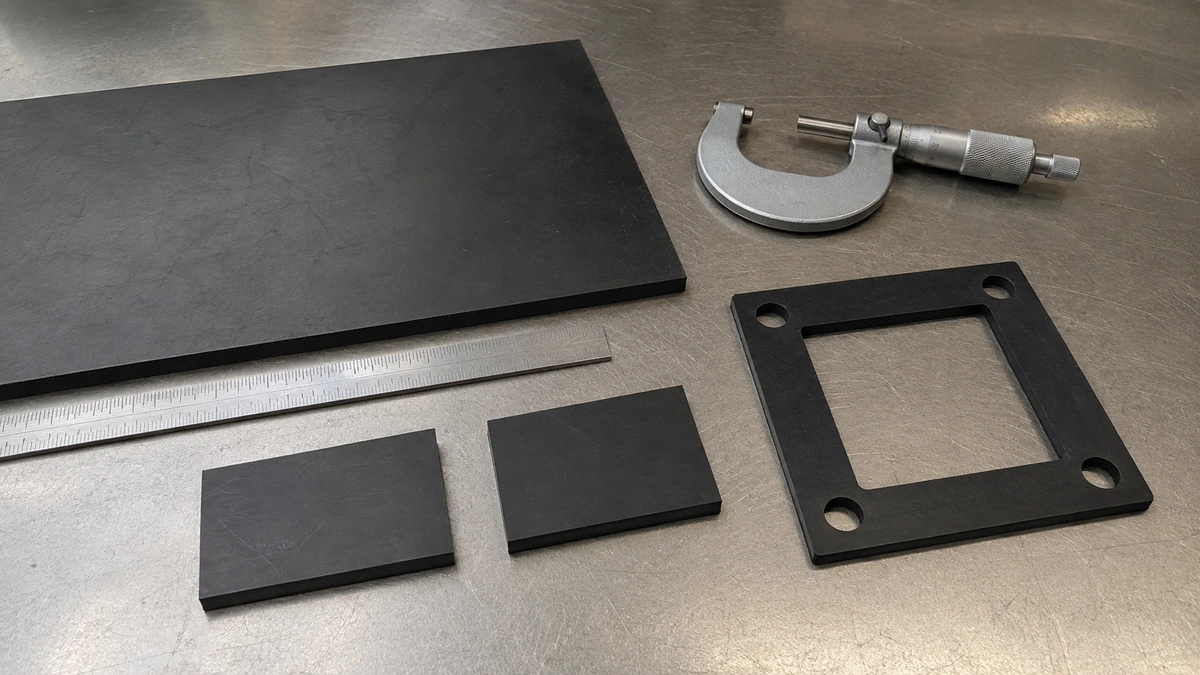
You may buy HNBR rubber sheet as a material, but the application succeeds or fails as a finished part. Describe what your cut sheet must do after installation. Is it sealing a flange, isolating vibration, protecting a surface, forming a flexible diaphragm, or acting as a wear strip? The function determines which sheet properties deserve the most attention.
Hardness affects how readily the material conforms to a surface and how it responds to load. A harder sheet is not automatically more durable, and a softer sheet is not automatically a better seal. The correct target has to work with the contact pressure, surface condition, available compression, clearance, and risk of deformation or extrusion in your assembly.
Thickness also belongs to the assembly, not to a generic product preference. Specify the nominal thickness and tolerance from your drawing or joint design. Do not increase thickness simply to compensate for uneven hardware or an uncertain gap. That change can alter compression, bolt load, movement, and edge stability.
Your RFQ should distinguish between a full sheet, slit strip, simple cut blank, punched part, or finished gasket. Include the overall dimensions, hole pattern, edge condition, surface requirement, and any flatness or visual limits that affect installation. If the part will be bonded, laminated, or backed, identify the mating material and the service environment because the complete construction needs its own review.
Approve a Compound, Not Only the HNBR Name
When you specify HNBR, remember that it identifies a polymer family rather than one universal formulation. Differences in acrylonitrile content, degree of hydrogenation, fillers, plasticizers, cure system, and other ingredients can change fluid response, heat aging, low-temperature flexibility, hardness, and mechanical behavior.
Specify the exact compound grade and request its technical data sheet. Your HNBR material specification needs to identify the properties that matter to your part. Before comparing values, check that the test methods, units, specimen conditions, and conditioning or aging procedures match.
A certificate of analysis can confirm specified batch results, but it does not prove performance in every service fluid or assembly. Regulatory declarations also answer a different question from engineering fitness. Keep material identification, batch conformance, regulatory documentation, and application validation as separate approval items.
Build Verification Around the Failure You Need to Prevent
Testing should reproduce the decision you need to make. If fluid exposure is the main risk, define the exact test fluid, temperature, time, specimen condition, and allowed change after exposure. ASTM D471 is one possible method for evaluating how liquids affect rubber properties, but the project still has to state the relevant fluid and acceptance limits.
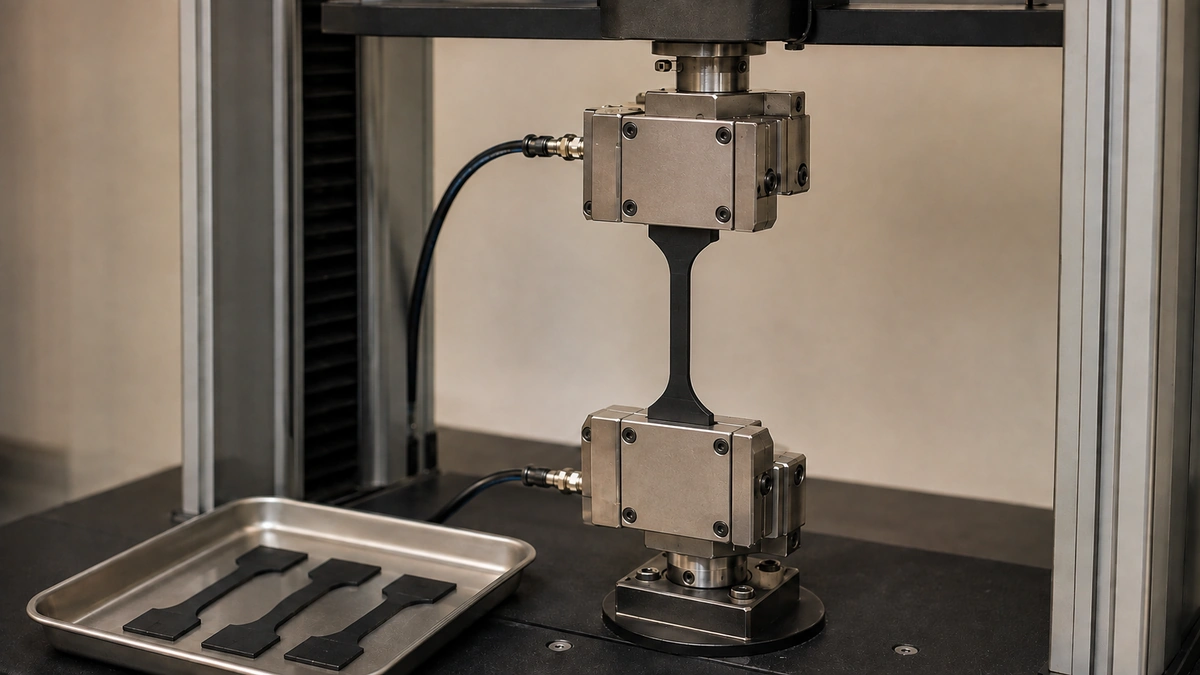
If deformation or sealing force matters in your application, review the property that represents that failure rather than relying on tensile strength alone. Hardness can be measured using a method such as ASTM D2240, while tensile properties may be reported using ASTM D412. These tests describe different aspects of the compound; one result cannot replace the others.
Laboratory data is most useful when it is followed by a sample or finished-part check. Verify that the delivered thickness, hardness, surface, and cut dimensions match the approved requirement. For a critical seal or moving component, test your part in the real assembly or in a controlled setup that represents its pressure, movement, fluid, and temperature cycle.
Record the approved grade and evidence so that a repeat order does not quietly become a different compound sold under the same material family name. If a substitution is proposed, review the changed formulation and relevant test data before accepting it.
Know When Another Elastomer Deserves Review
HNBR may remain your best candidate after screening, but it should not be protected from comparison. The comparison needs to follow the service condition that creates the risk in your application.
| Условия обслуживания | Practical screening direction | Что еще требует подтверждения |
|---|---|---|
| Mineral oil service at moderate temperature without a demanding heat or ozone requirement | NBR may deserve a cost and performance comparison | Fluid formulation, temperature cycle, wear, and required service evidence |
| Oil, wear, and elevated temperature occur together | HNBR remains a strong candidate | Exact compound, continuous versus peak temperature, fluid aging, and mechanical load |
| Aggressive fuel blends or temperatures beyond the verified HNBR grade | Review a suitable FKM grade rather than assuming HNBR will cover the condition | Fuel composition, low-temperature need, additives, cost, and compound-specific data |
| Hot water, steam, glycol-based brake fluid, or weathering is the main exposure and petroleum oil is not | An EPDM direction may be more appropriate | Fluid chemistry, temperature, oil contamination, and finished-part requirements |
This table is a screening aid, not a substitution rule. The HNBR vs NBR or HNBR vs FKM result can change with your fluid, temperature, or required mechanical behavior. Each material family includes multiple compounds, and a substitution can also change hardness, compression behavior, fabrication, cost, and the evidence required for approval.
Заключительные мысли
Choose an HNBR rubber sheet grade that suits your actual service conditions. Check the compound data and confirm critical performance through agreed testing or a representative sample before approval.
To discuss a suitable grade, send Weprofab your application details and sheet specifications.


