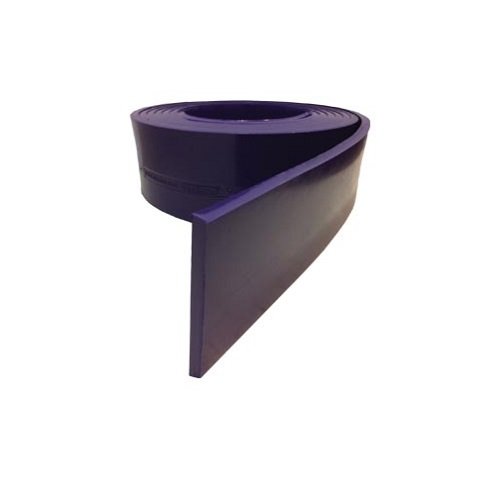
Weprofab Custom Rubber Sheet
Rubber sheets are sheets made of rubber or cloth coated with rubber. Utilized for gaskets, sealing, and specialized applications. It has better mechanical qualities, higher tensile strength, and lower elongation. Rubber sheets are suitable for producing seals, washers, chute linings, gaskets, door seals & hatch seals, and many more. They can be used flexibly for various purposes.
At Weprofab you can find 50+ different grades of rubber sheeting. You can choose the right material or we will advise the perfect one for your applications. Our products have passed various certifications such as RoHS, BS, FDA, ASTM, etc. With advanced manufacturing equipment and high-technology rubber process, we can produce thousands of rubber products at a competitive price. Weprofab supports mass production at a fast lead time. OEM and ODM customers are also welcome. If you have specific rubber sheet requirements, don’t hesitate to message us.

Used for manufacturing gaskets in automotive applications such as motorcycles, machines, etc. Handle -60°C to 450°C temperature range.

Material suitable for making gaskets, O-rings, seals, etc. Resistance to alcohol, water, synthetic oils, and more.

Offer superior airtight functionality. Resistant to weathering, UV rays, and aging. Withstand -40°C to +140°C temperature range.

Provide good resistance to heat, oil, and chemicals. Available in 100mm up to 2000mm length sizes.

High-quality cork rubber sheet suitable for low-impact areas and indoor use. Custom design, sizes, thicknesses are available here.

Durable and flexible diaphragm rubber sheet offer at cost-effective in Weprofab. It can be custom-cut to meet your applications or any projects.

Flexible at low and high temperatures EPDM rubber sheet. FDA-compliant product suitable for the food and beverages industry.

Weprofab develops high-end and commercial FKM rubber sheets. Available in 55 to 90 durometer.

Eco-friendly elastomer that operates in -20 to + 160 Deg F temperatures. It can defy both mild acid and salts.

Weprofab offers premium-grade HNBR rubber sheet material. This product provides resistance to abrasion, corrosion, and impact.

You can avail of Hypalon rubber sheets in different material grades, sizes, lengths and other specifications. Low MOQ and low cost.

Neoprene Rubber Sheet displays a high degree of chemical tolerance. It can handle -30 °C and +130 °C working temperatures.

One-of-a-kind general-purpose oil-resistant polymer. These products have conformed to PAH, CE, REACH, RoHS, standards, and more.

PARA rubber sheets can be produced in fully customizable lengths and thicknesses to meet your needs.

SBR rubber sheet Operates at -30 and +120 degrees Fahrenheit. This is safe, food-grade certified, and non-allergenic.
By Features
-
 Adhesive Rubber Sheet
-
 Ballistic Rubber Sheet
-
 Chequered Rubber Sheet
-
 Conductive Rubber Sheet
-
 Corrugated Rubber Sheet
-
 Elastic Rubber Sheet
-
 EPDM Rubber Strip
-
 Extruded Rubber Sheet
-
 Fabric Reinforced Rubber Sheet
-
 General Purpose Rubber Sheet
-
 High Friction Rubber Sheet
-
 Insulation Rubber Sheet
-
 Mud Flap Rubber Sheet
-
 Natural Rubber Sheet
-
 Perforated Rubber Sheet
-
 Raw Rubber Sheet
-
 Recycled Rubber Sheet
-
 Reinforced Rubber Sheet
-
 Rubber Joint Sheet
-
 Rubber Strips
-
 Self Adhesive Rubber Sheet
-
 Smooth Rubber Sheet
-
 Soft Rubber Sheet
-
 Synthetic Rubber Sheet
-
 Textured Rubber Sheet
-
 Thick Rubber Sheet
-
 Thin Rubber Sheet
-
 Vulcanized Rubber Sheet
-
 Waterproof Rubber Sheet
By Color


By Resistant Features


Why Choose Weprofab Rubber Sheets?

From raw materials, compounding rubber, mixing, vulcanization process, and packaging, Weprofab perform various strict quality control.

Guarantee to receive fully certified rubber sheet products from us. These comply with ASTM, REACH, RoHS, CE, etc.

All products are offered at direct factory price. Cost-effective rubber products, with a high return on investment.

You can request full customization of your specific products with us. We will help you in the entire process and manufacturing.
Rubber Sheet Benefits and Advantages
- Custom-cut to your specific lengths, sizes, and thicknesses
- Specific formulations resistant to oil, fuels, and chemical
- Available in low and high-temperature formulated sheet
- Rubber products provide protection to various machines.
- Rubber sheet is resistant to rust, discoloration, and electricity.
- Availability – you can choose from our wide selection of materials, colors, features, and sizes.


Rubber Sheets Applications
Weprofab rubber sheet is used in a wide range of industry. Some are the following:
- Industrial buildings
- Footwear industry
- Medical sector
- Food and beverages
- Railways and automotive,
- Marine and defense
- Agricultural machines
- Commercial and residential usage
- Original equipment manufacturer parts, etc
Choosing the Right Rubber Sheet Material
Weprofab specializes in manufacturing rubber sheets. We consider the following factors when choosing a material to make rubber sheets:
- Thickness
- Temperature
- Hardness
- Tensile Strength
- Specific Gravity
- Compression Set
- Elongation
- Tensile Modulus
- Abrasion, acid, oil, ozone, and UV resistance

Different Rubber Sheets Manufacturing Processes

- A method of forming a rubber substance into a specific shape using a mold
- Less expensive techniques, lowering overall production costs
- A process that is appropriate for rubber compounds with large surface areas
- Compression molding, transfer molding, and injection molding are all types of molding processes.

- This process used a high-pressure extrusion machine to drive synthetic or natural rubber material through a forming die.
- Make rubber components of various lengths and forms.
- Extruded parts include rubber sheet profiles, gaskets, cables, and tubing
- Products produced are exceedingly resilient, lightweight, flexible, and long-lasting.

- The process of dipping thin-walled molds in latex compounds and eventually removing them.
- After the dipping process, the final product is completed by vulcanization.
- Post-treatments may be required depending on the completed dipped product.
- Grip, bladders, tubing, rubber gloves, and balloons are examples of dip-molded goods.

- A high-performance rubber finishing method
- A procedure in which softened material is forced into the center of counter-rotating rollers.
- A method for flattening, smoothing, and blending rubber materials
- The ability to accurately change the thickness of the product
- When compared to other processes, calendering has significant operational expenses.
Various Rubber Sheet Product For Your Projects

- Build to last, versatile, and easy to clean
- Resistance against moisture
- Made from various rubber materials such as synthetic rubber, natural rubber, EPDM, and more.

- Withstand harsh environment
- Available in various thicknesses, sizes, materials
- Compliant to REACH, RoHS, CE, SGS, Etc.
- Accessible in different colors and patterns depending on your needs.

- Heavy-duty rubber cow mats
- Safe to use, easy to clean
- You can choose from our customized sizes, weights, and thicknesses.
- Features anti-fungal and anti-bacterial

- Multipurpose mat used for indoor and outdoor
- Easy to clean, durable, and have exceptional longevity
- Lightweight made from premium rubber
- Cost-effective commercial floor mats

- Multipurpose protection from dirt, spills, mud, snow,and more
- Made from thick, flexible rubber
- Strong, heavy-duty, and versatile
- Perfect for all types of vehicles
A 2 m × 1 m × 5 mm solid rubber sheet weighs about 12 kg when the compound density is 1.2 g/cm³. The calculation is 2 × 1 × 0.005 × 1,200 = 12 kg. The same sheet weighs 15 kg if its density is 1.5 g/cm³, so use the specific gravity of your selected compound before confirming freight or handling requirements.
For 5,000 identical gaskets cut from 3 mm rubber sheet, die cutting is normally more economical because the tooling cost is spread across the full batch. If you first need 20 samples and may still change the drawing, digital knife cutting avoids a production die. Send your drawing and planned batch size, and we will confirm the process before quoting the parts.
A rubber roll gives you continuous material, while a rubber sheet is supplied as a fixed-length piece. For example, a roll is more practical when your production line repeatedly cuts 3 m sealing strips because it reduces joints and loading stops. If your workshop needs 500 × 500 mm blanks for individual gaskets, pre-cut sheets are easier to handle and count.
Keep a 5 mm rubber sheet delivered on a roll around its original core instead of folding it into a carton. A tight fold can leave a crease that prevents the material from lying flat when you later cut gaskets. Store the roll indoors without load pressing against it; for long-term stock, confirm the compound and inspection period against ISO 2230 before releasing it to production.
Do not assume that a drawing requirement of 5.0 ± 0.1 mm is automatically achievable for every rubber sheet. Before quoting, we need to match that tolerance to the selected compound and manufacturing process; otherwise you may pay for unnecessary precision or receive material that does not fit the assembly. State the functional thickness limit on your drawing, and we will confirm the applicable ISO 3302-1 or agreed commercial tolerance before production. Fabric-reinforced sheet must be reviewed separately because ISO 3302-1 excludes some calendared composite products.