

Let’s dive into the fascinating world of materials—specifically silicone and rubber. These two substances may look similar at first glance, but they actually have quite a few differences that can affect their applications and uses. By the end of this article, you’ll have a clear understanding of what sets silicone and rubber apart.
For a product manufacturer, this difference affects more than material price. The wrong choice can change service life, warranty exposure, and the cost of replacing a failed part.
Understanding Silicone and Rubber
You encounter both silicone and rubber in various forms every day, from kitchen tools and baby bottle nipples to car tires and industrial seals. Both materials are elastomers, meaning they have elastic properties and can be stretched or compressed and still return to their original shape. Despite these similarities, their differences lie in their chemical composition, properties, and applications.
For your product, the material name is only the starting point. A part may pass a room-temperature sample test and still fail after entering an oil system, an outdoor enclosure, or a high-temperature assembly. The decision should connect the material family to the failure you need to prevent.
What is Rubber?
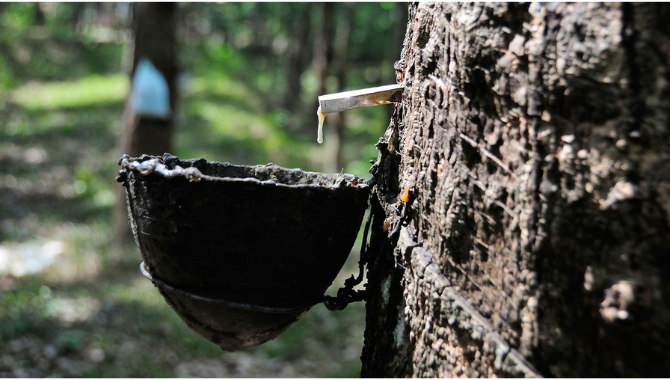
Rubber, or more specifically natural rubber, is derived from the latex or sap of the rubber tree, scientifically known as Hevea brasiliensis. This natural polymer consists mainly of cis-1,4-polyisoprene, which provides rubber with its characteristic elasticity and resilience.
Properties of Rubber
- Excellent elasticity and resilience
- Good resistance to abrasion and wear
- Can degrade when exposed to certain chemicals, oils, and UV light
- Biodegradable
In industrial sourcing, rubber can also mean a family of synthetic elastomers. NBR is commonly reviewed for oil-contact parts. EPDM is often reviewed for water, steam, ozone, and outdoor exposure. FKM deserves review when high heat and aggressive hydrocarbon media control the decision.
A specification such as ‘rubber, 70 Shore A’ is incomplete. Hardness describes indentation resistance, but it does not establish oil compatibility, ozone resistance, compression recovery, or finished-part durability.
What is Silicone?
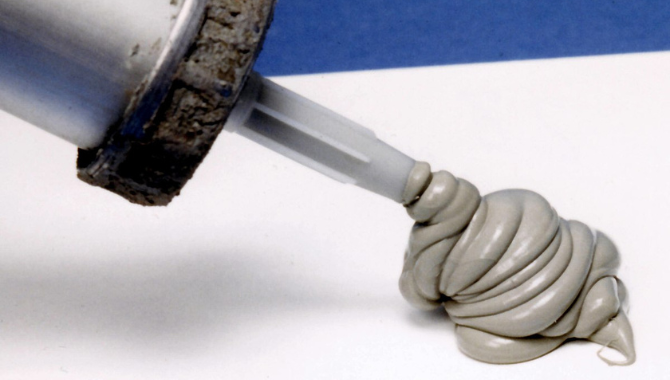
Silicone, on the other hand, is a synthetic polymer made by combining silicon, a naturally occurring chemical element, with other elements such as carbon, hydrogen, and oxygen. This unique composition gives silicone a set of properties that differentiate it from natural rubber.
Properties of Silicone
- Wide temperature resistance, maintaining elasticity from extreme cold to high heat
- Great resistance to moisture, oxidation, and ozone
- Excellent electrical insulation properties
- Resistant to UV light and many chemicals
- Not biodegradable
Silicone is often considered when a part must remain flexible through a wide temperature cycle. It is also used for electrical insulation and selected regulated products. Exact performance still depends on grade, hardness, post-curing, geometry, and test conditions.
Silicone is not automatically the best choice for every chemical application. It can perform well under heat, moisture, ozone, and UV exposure, yet perform poorly in some petroleum oils and fuels. When your part contacts oil or fuel, NBR and FKM deserve a direct comparison before approval.
Now, let’s look at some of the key differences between silicone and rubber:
1. Chemical Composition
Rubber is mainly composed of organic compounds, while silicone is a synthetic material consisting of silicon and various other elements.
Chemical composition helps narrow the options, but it does not decide the finished part by itself. Cross-section, compression, surface finish, curing, and the mating material can change the result.
2. Heat and Cold Resistance
Silicone exhibits superior resistance to extreme temperatures, making it suitable for a wide range of high- and low-temperature applications, whereas rubber may become brittle in cold conditions and soft in high heat.
Use the complete temperature cycle, not only the peak temperature. A part compressed during long heat exposure faces a different requirement from a part exposed to heat for a few minutes. A rubber compound may be more economical when temperature is moderate and mechanical wear is the larger risk.
3. Environmental Resilience
While both materials are resilient, rubber is biodegradable, whereas silicone is not. This makes silicone a preferred choice for applications where extended exposure to environmental elements and moisture is expected.
For outdoor products, the practical question is whether the material will retain elasticity and sealing force after weathering. Silicone and EPDM are common candidates. Natural rubber can offer excellent mechanical performance, but continuous ozone and UV exposure need separate review.
4. Electrical Properties
Silicone has excellent electrical insulating properties, making it a preferred material for electrical and electronic applications. Rubber, although insulating to an extent, may not offer the same level of performance in this regard.
The polymer name is not an electrical certification. You still need evidence for the actual grade, thickness, contamination level, and test method required by your product.
5. Chemical Resistance
Silicone generally has better resistance to a wide range of chemicals, including oils and solvents, compared to natural rubber.
This comparison needs a technical qualification. Silicone can resist many environmental conditions, but it is not a default material for petroleum oils and fuels. NBR or FKM may be a safer starting point for oil seals, depending on the fluid and temperature.
What the Choice Changes in Your Product
A seal that swells can create leakage. A compound that loses compression recovery can pass incoming inspection and fail after months of assembly pressure. A soft part may seal at first and then extrude under load.
Those failures affect more than the part price. You may face replacement labor, warranty claims, emergency shipments, customer downtime, or a mold change. The harder the part is to access and replace, the more important realistic validation becomes.
How to Specify and Validate the Material
When you request a quotation, explain what the part must do. State the contact medium, temperature cycle, pressure, movement, mating surface, expected life, annual volume, and compliance requirement. A drawing and hardness target alone do not describe the service condition.
Hardness and geometry must be reviewed together. A softer compound may seal with lower assembly force but extrude under pressure. A harder compound may resist deformation but fail to follow surface irregularities.
Test the finished part under realistic conditions. Check dimensional change, hardness change, compression recovery, leakage, cracking, swelling, and wear when those failure modes are relevant. Connect the approved sample to a compound batch and process record so later failures can be investigated.
Silicone vs Rubber: Quick Performance Comparison

The table below is a starting point for product planning, not a substitute for compound-specific testing. The correct decision depends on the part’s service conditions and the failure you need to avoid.
| Decision factor | Silicone | Rubber families | What to verify |
|---|---|---|---|
| Temperature cycling | Often strong across wide temperature changes | Varies widely by NBR, EPDM, FKM, natural rubber and other families | Actual minimum, maximum and dwell time |
| Petroleum oil and fuel | Not a default choice | NBR or FKM may be more suitable | Fluid composition, temperature and swell |
| UV and ozone | Generally strong | EPDM is often preferred; natural rubber needs protection | Weathering test and compression recovery |
| Abrasion and dynamic wear | May be limited in high-wear parts | Many rubber compounds offer stronger wear resistance | Movement, friction, load and surface finish |
| Electrical insulation | Often used for insulation | Some rubber grades also insulate | Grade, thickness and dielectric requirement |
| Relative cost | Often higher for specialized grades | Broad range depending on compound and volume | Tooling, cycle time and replacement cost |
Production and Curing Differences
Material selection and production method cannot be separated. The same nominal material can produce very different results when the curing system, mold design, post-cure, or dimensional tolerance changes.
Rubber Compounding and Vulcanization
Conventional rubber production usually starts with a compound that combines the base polymer with fillers, plasticizers, curing agents, and protective additives. Vulcanization creates the crosslinked network that gives the finished part its elasticity, hardness, and recovery. If the cure is inconsistent, the part may show uneven hardness, poor compression recovery, or batch-to-batch sealing changes.
- The compound affects oil resistance, wear, hardness, and aging.
- The cure curve affects processing window and production consistency.
- The mold and venting affect flash, surface defects, and dimensional stability.
Silicone Mixing, Curing, and Post-Curing
Silicone rubber may be processed through compression molding, liquid silicone rubber injection molding, or extrusion. Peroxide-cured and addition-cured systems have different processing and post-curing requirements. For a product with strict odor, cleanliness, or volatile-content limits, the curing route must be confirmed before mass production.
- Peroxide curing may require post-curing to reduce residual volatiles.
- Addition curing can support precise liquid injection molding when the formulation and equipment are controlled.
- Extrusion is useful for continuous profiles, but die design and shrinkage control affect tolerance.
For procurement, ask for the proposed curing system, post-cure condition, hardness tolerance, dimensional tolerance, and sample-to-production control method. These details are more useful than asking only whether the part is silicone or rubber.
How the Difference Affects Product Performance
| Performance question | Why it matters to your product | What to check before approval |
|---|---|---|
| Will the part recover after compression? | Loss of recovery can create leakage or looseness after assembly | Compression set, geometry, load and time |
| Will the surface survive movement? | Wear can create particles, noise, or loss of contact | Friction, stroke, load, surface finish and cycle count |
| Will the material swell? | Swell can change fit, force, and sealing dimensions | Fluid compatibility at operating temperature |
| Will the part remain flexible? | Hardening or embrittlement can cause cracking and early replacement | Temperature cycling, ozone and aging test |
| Will every batch behave the same? | Variation can cause assembly rejects and customer complaints | Batch records, hardness range and finished-part inspection |
Mechanical Performance and Compression Recovery
A material can remain flexible and still be wrong for a moving or compressed part. Mechanical selection should begin with the load path and the failure that appears after repeated use, not with the material’s reputation in a general product category.
Elasticity Is Not the Same as Sealing Recovery
Silicone can remain flexible over a wide temperature range, but flexibility alone does not prove that a gasket will maintain contact pressure. A sealing part also needs suitable compression recovery, geometry, and resistance to extrusion. Some rubber compounds provide a better balance when the part sees repeated loading or abrasive contact.
| Mechanical concern | Silicone tendency | Rubber selection question |
|---|---|---|
| Compression recovery | Can remain flexible, but grade and cure control are critical | Which compound and geometry maintain sealing force over time? |
| Tear resistance | May need reinforcement around sharp edges and thin sections | Does the rubber grade tolerate assembly stretch and edge stress? |
| Abrasion | May wear faster when friction dominates | Would NBR, polyurethane, or another wear-focused compound perform better? |
| Dynamic movement | Useful in some flexible parts, but friction and heat need testing | What are the stroke, cycle count, load, and surface finish? |
Temperature Cycling and Environmental Exposure
Peak temperature is only one part of the decision. Repeated heating and cooling can change hardness, dimensions, compression recovery, and adhesion. A part that survives a short heat exposure may still fail after months of cycling.
- Silicone is often considered for wide temperature cycling, but oil and fuel exposure can change the choice.
- EPDM is often a practical outdoor option when water, ozone, and weathering dominate.
- Natural rubber can provide strong mechanical performance, but continuous ozone and UV exposure require protection or another compound.
- FKM may be preferred when high temperature and aggressive hydrocarbon media create the main risk.
For your product, specify the full cycle: starting temperature, peak temperature, dwell time, cooling rate, number of cycles, and load during exposure. This makes a sample test more representative of actual service.
Chemical Compatibility Is Material-Specific
The phrase chemical resistance is too broad to approve a part. Water, steam, petroleum oil, fuel, hydraulic fluid, cleaning chemical, and solvent can produce completely different results in the same material family.
| Exposure | Likely starting discussion | Why the material name is not enough |
|---|---|---|
| Water, moisture and weather | Silicone or EPDM | Temperature, compression set and seam design still control life |
| Petroleum oil and fuel | NBR or FKM | Fluid chemistry and heat can cause swelling or hardening |
| Steam and hot water | EPDM or a specified heat-resistant grade | Pressure, temperature and cycle time change compatibility |
| Solvents and cleaning agents | Application-specific compound review | Concentration and exposure time can dominate the result |
For an oil-contact seal, silicone should not be selected simply because it has good weather resistance. For an outdoor gasket, NBR should not be selected simply because it is less expensive. The medium and the failure mode must lead the decision.
Electrical, Food, and Medical Requirements
Silicone is widely considered for electrical insulation, food-contact parts, and medical products, but the product claim depends on the exact grade and process. Rubber can also meet specialized requirements when the compound, additives, cleanliness controls, and testing are appropriate.
| Requirement | What silicone may offer | What must still be verified |
|---|---|---|
| Electrical insulation | Stable insulation across a broad temperature range | Dielectric strength, thickness, contamination and finished-part test |
| Food contact | Available in suitable compliant grades | Additives, cure system, post-cure, migration and market requirement |
| Medical use | Flexible grades and selected biocompatibility options | Grade, sterilization method, extractables and regulatory evidence |
| Low odor or cleanliness | Possible with controlled formulation and post-cure | Volatile content, storage, packaging and production controls |
Service Life, Cost, and Manufacturing Risk
Silicone often carries a higher material price, while general-purpose rubber may reduce the initial part cost. That comparison is incomplete if one material causes more replacements, more difficult bonding, longer validation, or higher warranty exposure.
- Compare the expected replacement interval, not only the unit price.
- Include tooling, cycle time, post-curing, inspection, packaging, and scrap in the project estimate.
- For a hard-to-replace seal, a higher material cost may be justified if it reduces field labor or downtime.
- For a high-volume, moderate-temperature part, a suitable rubber compound may deliver the better total cost.
Before approving a material substitution, compare the failure cost of the current part with the validation cost of the new material. This prevents a low quotation from becoming a high warranty expense.
Related Manufacturing Resources
For projects that need custom sheet stock for gaskets, washers, or liners, review the rubber sheet manufacturing options. For continuous sealing profiles, compare the available silicone rubber profile formats and silicone rubber strip options.
Application-Based Selection Guide
Use this table to identify a starting material family. It is not a universal material approval because the same product category may have different fluids, loads, temperatures, and compliance requirements.
| Product condition | Starting point | Why the choice can change | Procurement check |
|---|---|---|---|
| High temperature with weather exposure | Silicone or EPDM | Oil, pressure, and abrasion may favor another compound | Temperature cycle, ozone and medium |
| Petroleum oil or fuel contact | NBR or FKM | Temperature and fuel chemistry determine the grade | Swell, hardness change and leakage |
| Outdoor weatherstripping | EPDM or silicone | Compression set and surface geometry control sealing life | Weathering and compression recovery |
| Electrical insulation | Silicone or specialty rubber | Voltage, thickness and contamination can change the requirement | Dielectric test and grade evidence |
| High abrasion or dynamic movement | Selected rubber compound | Silicone may be unsuitable if wear dominates | Abrasion, friction and fatigue test |
| Food-contact or regulated products | Compliant silicone or rubber grade | Additives, post-cure and cleanliness are critical | Compliance documents and finished-part controls |
| Vibration damping | Rubber or silicone by frequency | Hardness and dynamic behavior matter more than name alone | Load, frequency, temperature and loss factor |
Common Failure Modes and What to Check
| Observed failure | Likely investigation direction | Business consequence |
|---|---|---|
| Swelling | Fluid compatibility, temperature and compound selection | Leakage, assembly interference and replacement claims |
| Hardening or cracking | Heat, ozone, UV, aging and formulation | Shortened service life and field replacement |
| Compression loss | Cure quality, compression set, geometry and load | Sealing failure after installation |
| Tearing or edge damage | Hardness, sharp edges, assembly force and tear resistance | Scrap, rework and installation delays |
| Surface tackiness or residue | Cure, post-cure, additives and storage | Contamination, customer complaints and rejected batches |
| Dimensional variation | Mold tolerance, shrinkage, process control and inspection | Assembly mismatch and inconsistent product performance |
Procurement Questions Before Ordering
A reliable quotation needs more than a material name and a Shore A target. Send the information that allows the compound, process, and validation plan to be matched to the finished product.
- What medium contacts the part, and for how long?
- What are the minimum and maximum temperatures, including dwell time and cycling?
- Is the part static, reciprocating, rotating, compressed, or exposed to vibration?
- What dimensions, tolerances, hardness range, color, and surface finish are required?
- What failure would create the highest cost: leakage, wear, cracking, contamination, or assembly rejection?
- Which finished-part tests, compliance documents, and batch records are required?
- Tires for automobiles, bicycles, and heavy machinery
- Industrial belts and conveyor belts
- Seals and gaskets in automotive and industrial settings
- Shoe soles and various footwear components
- Non-slip mats and flooring
- Kitchenware such as baking molds and cooking utensils
- Sealants and adhesives
- Medical and dental implants and devices
- Electrical insulation components
- Automotive components like gaskets and seals
- Personal care products including baby bottle nipples and menstrual cups
Applications
Now that you understand the differences between silicone and rubber, let’s explore their unique applications.
Common Applications of Rubber

How Rubber Is Used in These Products
Tires for automobiles, bicycles, and heavy machinery rely on rubber compounds that balance grip, fatigue resistance, heat build-up, and wear. The compound is selected around the load and movement rather than the word rubber alone; a heavy-machine tire and a bicycle tire do not need the same formulation.
Industrial belts and conveyor belts use rubber for traction, flexibility, and repeated bending. Cover compound, reinforcement, splice quality, and resistance to the conveyed material determine whether the belt remains stable in production.
Seals and gaskets in automotive and industrial settings are designed around the contact medium, compression, temperature, and surface finish. NBR, EPDM, FKM, silicone, and other families may all be correct for different systems.
Shoe soles and footwear components use rubber where grip, flex fatigue, abrasion, and surface hardness matter. A compound that is too soft may wear quickly, while one that is too hard may reduce traction or comfort.
Non-slip mats and flooring depend on friction, resilience, odor, weathering, and cleaning exposure. The correct grade also depends on whether the product is used indoors, outdoors, around oil, or in a high-traffic area.
These applications do not use one interchangeable rubber. A tire, hydraulic seal, outdoor gasket, and vibration mount face different failure risks. Their compounds and curing requirements should not be copied from one another.
Common Applications of Silicone
How Silicone Is Used in These Products
Kitchenware such as baking molds and cooking utensils uses silicone when release behavior, heat flexibility, and repeated washing are important. The finished grade and additives still need to meet the intended food-contact requirement.
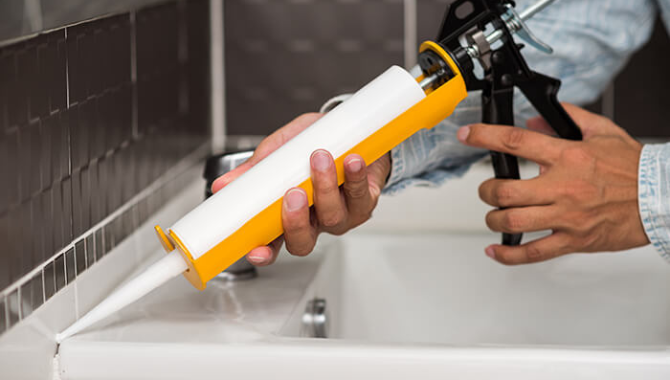
Sealants and adhesives use silicone for flexible joints and weather exposure. The result depends on adhesion to the substrate, cure chemistry, joint movement, surface preparation, and the environment after installation.
Medical and dental implants and devices may use selected silicone grades for flexibility and biocompatibility. Medical use requires traceable material evidence, controlled processing, sterilization compatibility, and the applicable regulatory review.
Electrical insulation components use silicone where flexibility and temperature stability support the design. Thickness, dielectric performance, contamination control, and the finished-part test are still part of the specification.
Automotive components like gaskets and seals may use silicone in heat- and weather-exposed areas, but oil, fuel, abrasion, and compression requirements can favor NBR, EPDM, FKM, or another rubber family.
Personal care products including baby bottle nipples and menstrual cups require controlled grades, clean processing, and market-specific compliance evidence. A general silicone label does not replace those checks.
For food, medical, or personal-care products, the polymer name is not enough. The grade, additives, post-cure, cleanliness controls, and applicable compliance evidence must match the finished product and market.
FAQ: Silicone vs Rubber
Is silicone better than rubber for high-temperature applications?
Silicone is often a strong starting point for wide temperature cycling, but it is not automatically the best material. Oil, fuel, abrasion, compression, and pressure may make FKM or another rubber family more suitable.
Is silicone resistant to oil and solvents?
Silicone resists many environmental conditions, but it is not a universal oil- and fuel-resistant material. Confirm the exact fluid, temperature, exposure time, and swell limit before approval.
Which material lasts longer outdoors, silicone or rubber?
There is no universal winner. Silicone and EPDM may perform well in outdoor weathering, while natural rubber may need protection against ozone and UV. The result depends on compound, geometry, compression, and aging conditions.
Which material is better for seals and gaskets?
The sealing medium and failure mode decide the starting point. Silicone can suit heat and weather exposure, while NBR, EPDM, or FKM may be better for oil, steam, or fuel contact.
Is silicone safer than rubber for food-contact products?
Safety depends on the finished grade, additives, curing, post-curing, cleanliness, and applicable compliance evidence. The word silicone alone does not prove food-contact suitability.
How does manufacturing silicone differ from manufacturing rubber?
Rubber typically relies on compounding and vulcanization, while silicone may use compression molding, liquid injection molding, extrusion, and post-curing. The selected process affects tolerance, surface quality, cycle time, and consistency.
Does silicone cost more than rubber?
Specialized silicone grades often cost more per part, but total cost also includes tooling, processing, replacement, warranty, and downtime. A lower material price is not automatically the lower project cost.
What information should I provide for a silicone or rubber quotation?
Provide the drawing, dimensions and tolerances, hardness, contact medium, temperature cycle, movement or load, expected service life, annual volume, color, compliance needs, and required tests.
Conclusion
In conclusion, while silicone and rubber share some similarities as elastomers, their distinctive properties make them suitable for different applications. Understanding the specific characteristics of each material is essential in choosing the right material for a given use case. Whether you’re designing a product, selecting components for manufacturing, or simply gaining a better understanding of everyday materials, knowing the difference between silicone and rubber can be highly beneficial.
Now, armed with this knowledge, you can confidently identify when to choose silicone over rubber, or vice versa, and appreciate the unique qualities each material brings to the table.
For custom rubber and silicone components, WeProFab can review your drawing, service conditions, material target, and testing requirements before production. Send the part details and operating conditions so the compound, hardness, process, and validation plan can match your product.


